
The Question Every Homeowner Asks First
If you're considering a kitchen remodel in Homestead, one of the first questions on your mind is probably: How long is this going to take? It's a fair question. Your kitchen is the heart of your home, and living without a fully functioning one — even temporarily — takes real planning.
The truth is, kitchen remodel timelines vary depending on the scope of work, material availability, permitting, and a handful of other factors. But after years of completing kitchen projects across Homestead and the surrounding South Florida communities, we've learned that the best thing we can do for our clients is set honest, realistic expectations from day one.
Here's a detailed breakdown of what a typical kitchen remodel timeline looks like, phase by phase, so you can plan your life around the work — not the other way around.
Phase 1: Design and Planning (2–4 Weeks)
Before anyone picks up a hammer, there's important groundwork to cover. This phase includes:
- Initial consultation and measurements — We visit your home, discuss your vision, assess the existing space, and take detailed measurements.
- Design development — Whether you're going with custom cabinetry, new countertops, updated flooring, or a complete layout change, this is when those decisions get made.
- Material selection — Choosing cabinets, countertop materials, backsplash tile, fixtures, and appliances. Lead times on materials can vary widely, so early decisions help keep things on track.
- Budget finalization — We provide a transparent, itemized estimate so there are no surprises down the road.
This phase typically takes two to four weeks, depending on how quickly decisions are made and whether any custom elements need to be sourced. Rushing through planning almost always leads to delays later, so we encourage our clients to take the time they need here.
Phase 2: Permitting (1–3 Weeks)
In Homestead, most kitchen remodels that involve electrical, plumbing, or structural changes require permits from the City of Homestead Building Department. This is not a step to skip. Unpermitted work can create serious problems when it's time to sell your home or file an insurance claim — especially in South Florida, where building codes exist to protect you from storm damage.
The permitting process generally takes one to three weeks, though it can occasionally take longer depending on the complexity of the project and the current workload at the building department. A good contractor handles this process for you, and at Homestead Building Contractors, that's exactly what we do.
Phase 3: Demolition and Rough Work (1–2 Weeks)
This is when things start to feel real. During demolition, we carefully remove old cabinets, countertops, flooring, fixtures, and appliances. If your remodel involves moving walls, relocating plumbing lines, or updating electrical wiring, that rough work happens during this phase as well.
Demolition and rough-in work typically takes one to two weeks. It's the messiest part of the process, but it's also where we often uncover hidden issues — outdated wiring, water damage behind walls, or plumbing that doesn't meet current code. Addressing these issues now prevents bigger headaches later.
A Note About Older Homestead Homes
Many homes in Homestead were built decades ago, and older construction can present surprises once walls are opened up. We always advise clients to build a small contingency buffer — both in time and budget — for the unexpected. It's not about expecting the worst; it's about being prepared.
Phase 4: Installation (3–5 Weeks)
This is the longest phase, and it's where your new kitchen really starts to take shape. Installation typically follows this general order:
- Framing and drywall — If any walls were moved or opened up, they get rebuilt and finished first.
- Electrical and plumbing — New wiring, outlets, lighting fixtures, and plumbing connections are installed and inspected.
- Flooring — Whether you've chosen tile, luxury vinyl plank, or another material, flooring goes in before the cabinets.
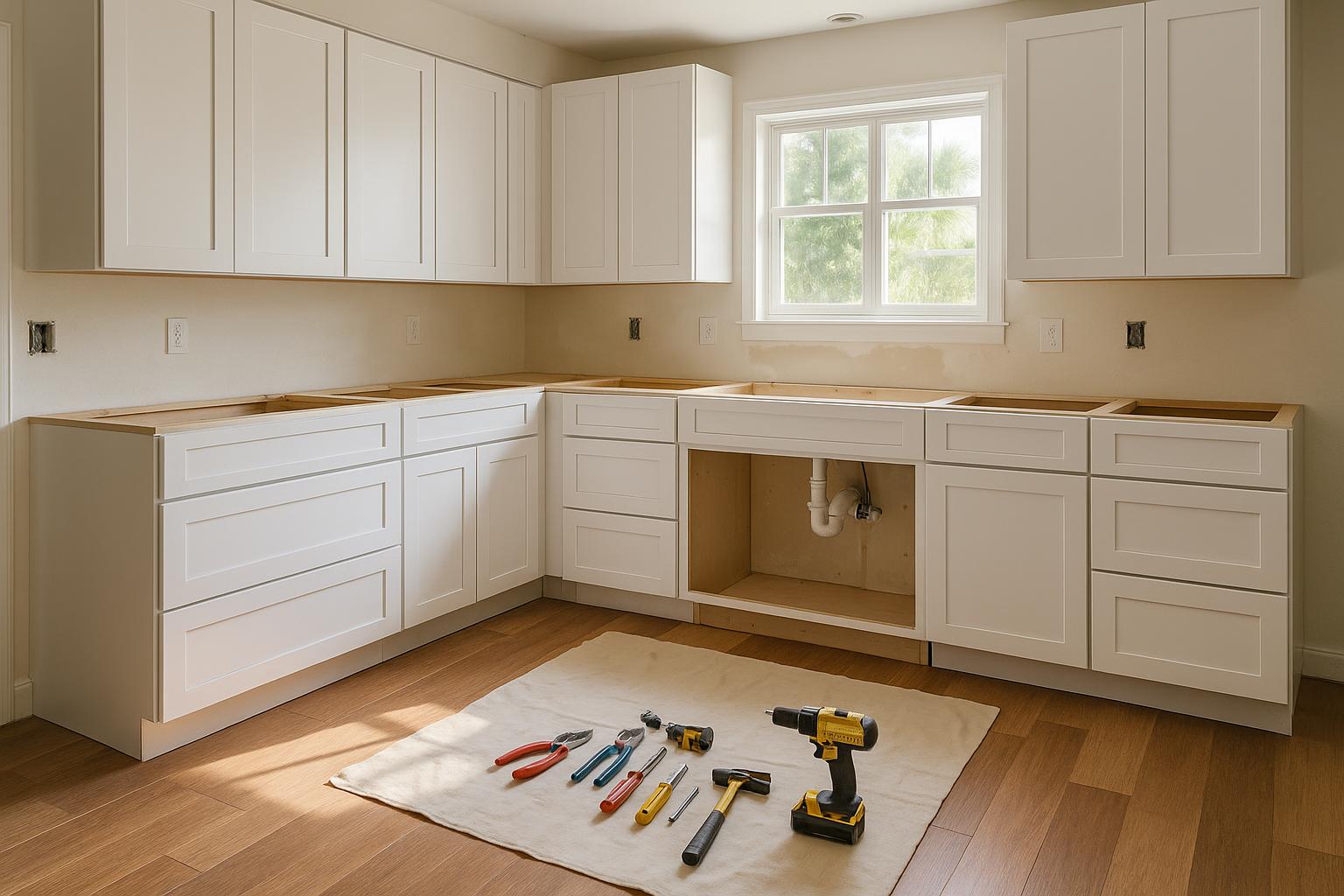
- Cabinetry — Custom or semi-custom cabinets are installed and leveled with precision.
- Countertops — Once cabinets are in place, countertops are templated, fabricated, and installed. Stone countertops like granite or quartz usually require a separate templating visit before fabrication.
- Backsplash and tile work — Tile installation adds character and protects your walls.
- Fixtures and appliances — Sinks, faucets, lighting, and appliances are connected and tested.
- Painting and finishing touches — Interior painting, trim work, caulking, and final hardware installation complete the look.
This phase generally runs three to five weeks, depending on the scope of work and material lead times. Custom cabinetry, for example, can add time compared to stock or semi-custom options, but the results are often worth the wait.
Phase 5: Final Inspections and Walkthrough (3–5 Days)
Once everything is installed, we schedule any required final inspections with the city. After inspections pass, we do a detailed walkthrough with you to make sure every detail meets your expectations. We check cabinet alignment, test every fixture, inspect paint and finishes, and address any punch-list items before we consider the job complete.
This final phase usually takes just a few days, but it's one of the most important. It's our chance to make sure you're genuinely happy with the finished product.
So, How Long Does a Kitchen Remodel Really Take?
For a typical mid-range kitchen remodel in Homestead, you're looking at roughly 8 to 14 weeks from design to completion. Smaller projects — like a countertop replacement paired with new cabinet hardware and a fresh coat of paint — can be done in significantly less time. Larger, more complex renovations with custom elements may take longer.
Here are a few factors that can extend your timeline:
- Custom materials with long lead times — Some specialty tiles, imported stone, or custom cabinetry can take weeks to arrive.
- Permit delays — These are outside anyone's direct control, but an experienced local contractor knows how to navigate the process efficiently.
- Scope changes mid-project — Changing your mind about the layout or materials once work has started is understandable, but it will add time.
- Seasonal demand — In communities like Homestead, Florida City, and Cutler Bay, remodeling demand can spike during certain times of year.
How to Keep Your Remodel on Schedule
The single best thing you can do to keep your kitchen remodel running smoothly is to work with a contractor who communicates clearly and plans thoroughly. Beyond that, here are a few practical tips:
- Make material selections early in the design phase.
- Be decisive — delayed decisions delay construction.
- Build a realistic contingency into your budget and timeline.
- Ask your contractor for a written schedule with milestones.
- Stay in regular communication throughout the project.
At Homestead Building Contractors, we believe that straightforward communication is just as important as quality craftsmanship. When you know what to expect and when to expect it, the entire remodeling experience becomes less stressful and more exciting.
Ready to Start Planning?
If you're a homeowner in Homestead or the surrounding areas — including Palmetto Bay, Naranja, and Leisure City — and you've been thinking about a kitchen remodel, we'd love to talk. Contact us for a free consultation, and we'll walk you through a realistic timeline tailored to your specific project.